The origin of Loong culture can be traced back to the Neolithic Age, and its earliest form was a totem product of the "vague synthesis" of natural forces by primitive ancestors. Faced with inexplicable natural phenomena such as thunder and lightning, heavy rain, floods, and powerful animals (such as snakes, crocodiles), our ancestors imagined a dominant "divine creature" — which was the germination of the concept of the Loong.
Four Phases of Evolution
The Loong — rendered in the West as "dragon" yet fundamentally distinct — is the paramount spiritual symbol of Chinese civilisation. Its evolution spans over seven thousand years, from a primitive totem of the Neolithic age to the living embodiment of the Chinese national spirit.
Unlike the fire-breathing western dragon, the Chinese Loong is a benevolent composite deity: a creature of rivers and rain, of imperial authority and cosmic harmony. It was born from the imagination of our ancestors as they sought to understand thunder, floods, and the forces of nature — and it grew, over millennia, into the soul of a nation.
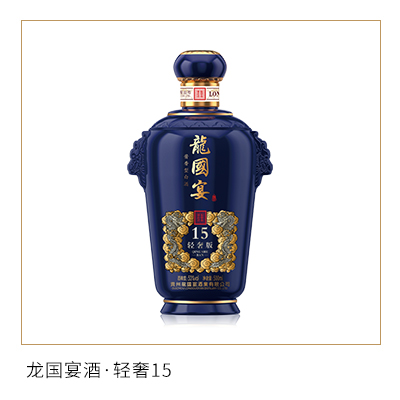
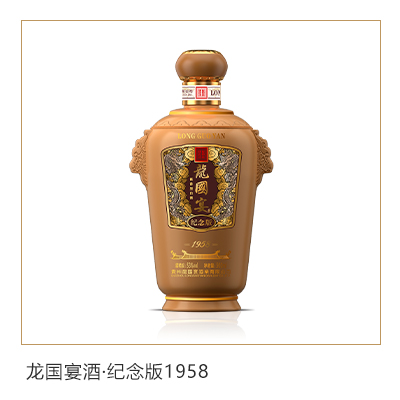
At LongGuoYan, the Loong is not merely a motif on our bottles. It is the living heritage that inspires our craft — the same spirit of mastery, longevity, and excellence that has driven Chinese civilisation for seven thousand years, distilled into every bottle we produce.
Genesis & Embryonic Phase
Totem Worship in the Neolithic Age
c. 5000 – 4000 BCE
A "pig dragon" mound unearthed at the Zhihai Site in Fuxin — one of the earliest and largest Loong images discovered in China, dating back approximately 8,000 years.
The clam shell Loong unearthed at the Yangshao Culture Site in Puyang, Henan Province — measures 1.78 metres in length and dates back approximately 6,500 years.
Fine jade pig dragon from the Hongshan Culture Site, dating back approximately 5,500 years.
The coiled-serpent Loong shape found across Neolithic sites — the most identifiable early Loong form, which was the prototype of the concept of the Loong.
◆ · · · ◆
Development & Formalization Phase
Divinity & Imperial Power Symbols
2070 BCE – 220 CE
The turquoise Loong-shaped ornament from the Xia Dynasty — one of the earliest composite Loong forms.
Jade Loong from the Shang and Zhou Dynasties, featuring snake body, claws, and antlers — the composite creature taking shape.
Liuhe Loong pattern lacquer from the Zhou Dynasty — the increasing association with ritual and ceremony.
Bronze Loong with horns, claws, and scale — the Shang period solidifying the iconography.
Loong cave jade ornament during the Qin Dynasty.
Solemn Loong relief from the Han period — linked exclusively to the imperial court and Heaven.

Twisted Loong stele fine line from the Han Dynasty — the imperial symbol reaching its apex.
As society entered the age of civilisation, the image and cultural connotations of the Loong gradually became enriched and established. The Loong's form takes the snake body as its core, integrating various animal features such as deer antlers, ox ears, eagle talons, and fish scales into a single composite creature. From the Xia, Shang, and Zhou dynasties onward, the Loong became increasingly closely associated with legendary heroic ancestors such as the Yellow Emperor and Yu the Great. During the unified era of the Qin and Han dynasties, Loong worship was formally merged with imperial worship. Emperors called themselves "True Loongs, Sons of Heaven" and the Loong became an exclusive symbol of imperial power, growing ever more majestic and complex in its imagery.
◆ · · · ◆
Popularization & Integration Phase
Folklorization and Systematization
from the Wei-Jin to the Ming-Qing Dynasties · 220 CE – 1912 CE
Silver artwork from the Wei Jin era with vivid Loong motifs — reflecting the fusion of court and folk traditions.

Silk tapestry weaving with Loong motif during the Tang Dynasty — Loong imagery spreading into daily life.

Auspicious bronze coin with Loong image during the Tang Dynasty — fortune and blessings intertwined.
Noble fortune with realistic cloud Loong motif — Song Dynasty refinement.

Jade carved on jade with Loong motifs — Ming Dynasty artisanal mastery.
Red lacquerware vase with vivid Loong — the Qing Dynasty's most elaborate expression.
Front Loong Hall in the Palace Museum, Beijing — Qing Dynasty grandeur at its peak.
Traditional Loong Boat Festival during the Qing Dynasty — the Loong entering the daily life of the common people.
Textile Loong robe with golden dragon embroidery from the Qing Imperial Collection — a core decorative theme across clothing and art.
While imperial power monopolised the lofty status of the Loong, Loong culture also deeply permeated folk society across various fields. Loong imagery further became a core decorative theme in architecture, clothing, painting, literature, and other areas. The Loong Boat Festival, regional Loong dances, and ceremonial dragon processions embedded the Loong into the rhythms of everyday Chinese life — creating an unbroken cultural thread that connected the emperor's throne to the farmer's harvest.
◆ · · · ◆
Sublimation & Identity Phase
National Spirit Symbol in Modern & Contemporary Times
Late 19th Century – Present
Loong lantern ceremony and commemorating performances — the Loong as celebration and cultural pride.
Loong cultural sculpture — contemporary artistic reinterpretation of the ancient symbol.

Loong boat racing held nationally — the living, participatory expression of Loong culture in modern China.

Red Loong cultural and creative imagery — the national symbol reborn in contemporary design.
Traditional Loong dance festival — preserving and transmitting 7,000 years of living heritage.
Theatrical Loong representations — the symbol alive in performance, art, and popular culture.
Loong embroidered art and paper-cuts — folk craftsmanship carrying the spirit forward.
Since modern times, the Loong has completely transcended its role as a symbol of imperial power and evolved into the identity and spiritual emblem of the entire Chinese nation. Today's Loong culture embodies the national spirit of courage, progress, boundless vitality, good fortune, harmony, and unity. It inspires the Chinese nation to strive constantly for self-improvement and serves as a core symbol of cultural confidence and national cohesion.
LongGuoYan · Heritage in Every Drop
The Loong Lives in Our Craft
Seven thousand years of Loong culture — distilled into every bottle of LongGuoYan.
Brewed by Time, Honoring the Classics. Savor China, Share the Sauce Aroma with the World.